What's an A-Corp?
In June, the first ever Artist Corporations bill was signed into law in Colorado. Beginning in early 2027, artists and creators will be able to form a new kind of company designed around creative purpose, ownership, and independence.
Three weeks ago we were invited by the Boulder County Arts Alliance to speak at a town hall of Boulder’s creative community. The room was full — more than 100 people. When the moderator asked how many were artists, every hand went up.
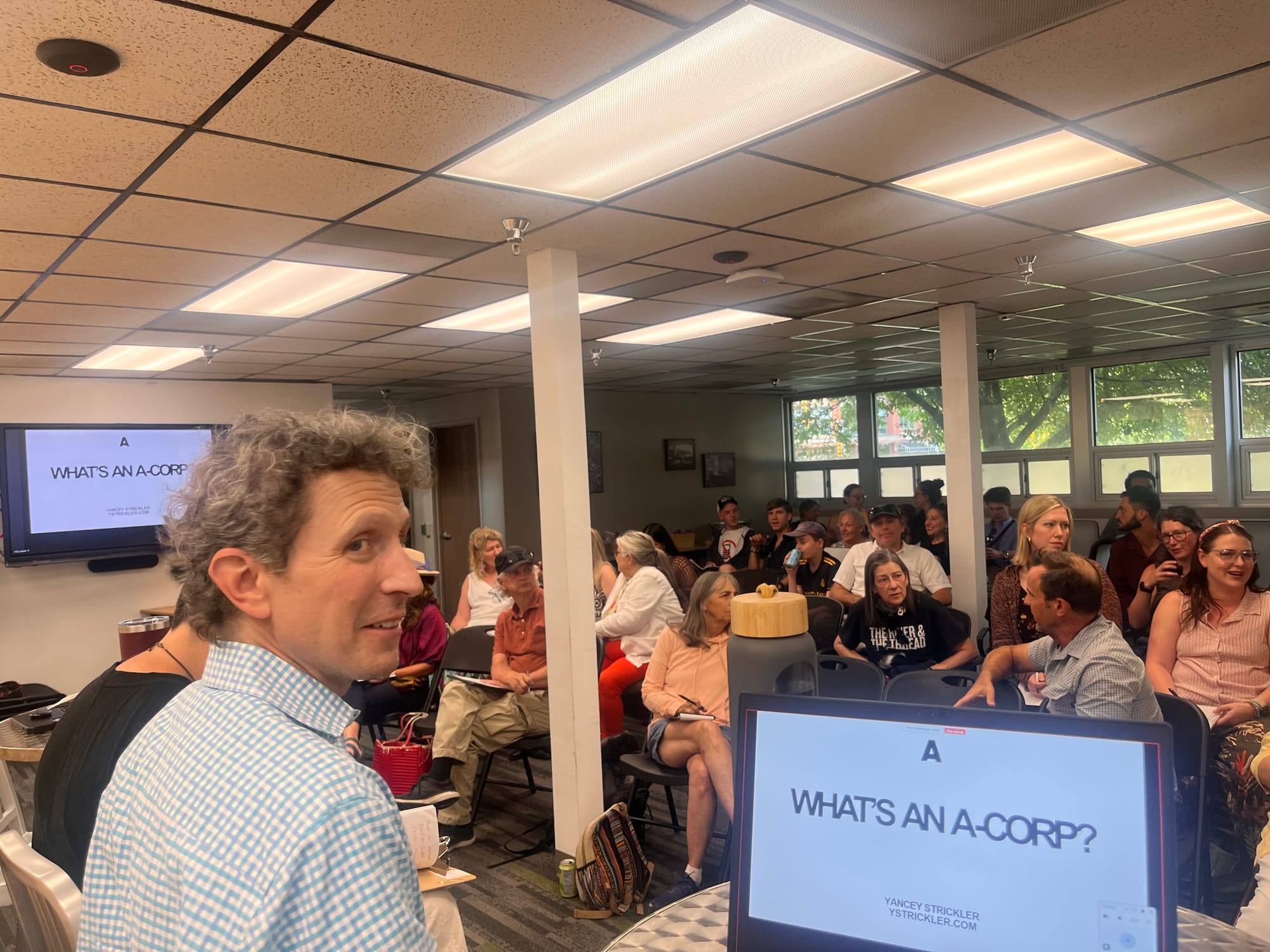
During the session I gave a fifteen-minute presentation that went through what an A-Corp is and how it works. After a moderated discussion with a panel, we took audience questions for more than an hour. The questions were sophisticated, nuanced, and showed a real belief in the collective potential of Artist Corporations.
Below is an abbreviated version of the talk and slides I gave, as well as an edited version of the audience Q&A. On Wednesday, August 12 at 3pm ET, I'm hosting an online information session for anyone interested in learning more. RSVP here.
Everyone here has heard about A-Corps. But what is one, actually?
Let me start by giving a simple definition:
An Artist Corporation is a new company form designed to protect creative people and creative work by default.
Tonight I'm going to explain how the A-Corp works, where the idea came from, what it does, what it doesn’t do, and what we hope it makes possible.
But first, a little about who I am and where this project comes from.
Where the idea came from
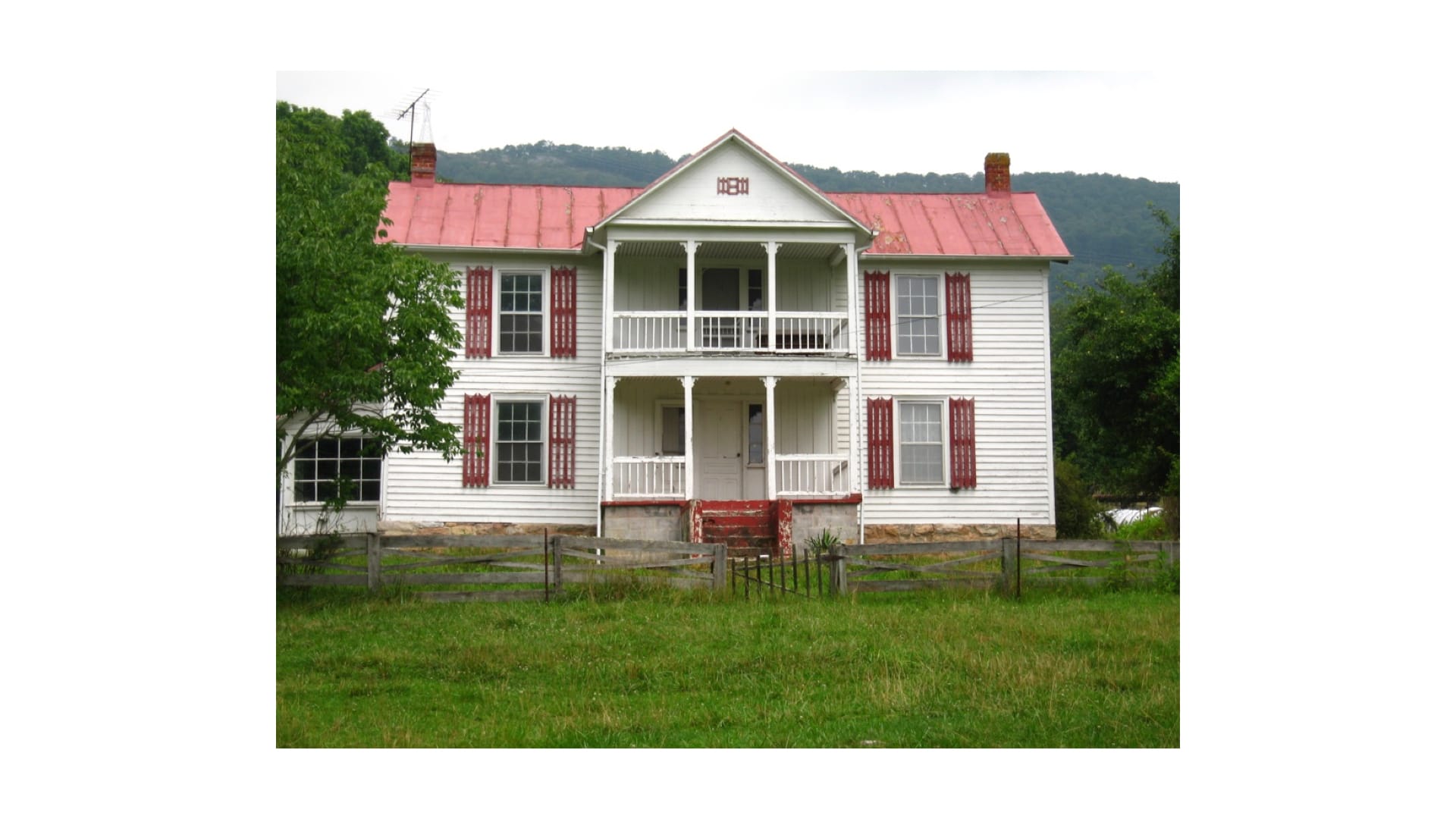
My name is Yancey Strickler. I grew up on a farm in southwest Virginia, the son of a musician and a secretary. I grew up into a creative life.
Making music never made money for my dad, but it's always been a deep part of who he is and who we were as a family. Music was his identity, a way of life.
That experience stayed with me: creative work can be central to who we are regardless of whether it makes money or the wider world recognize its value.
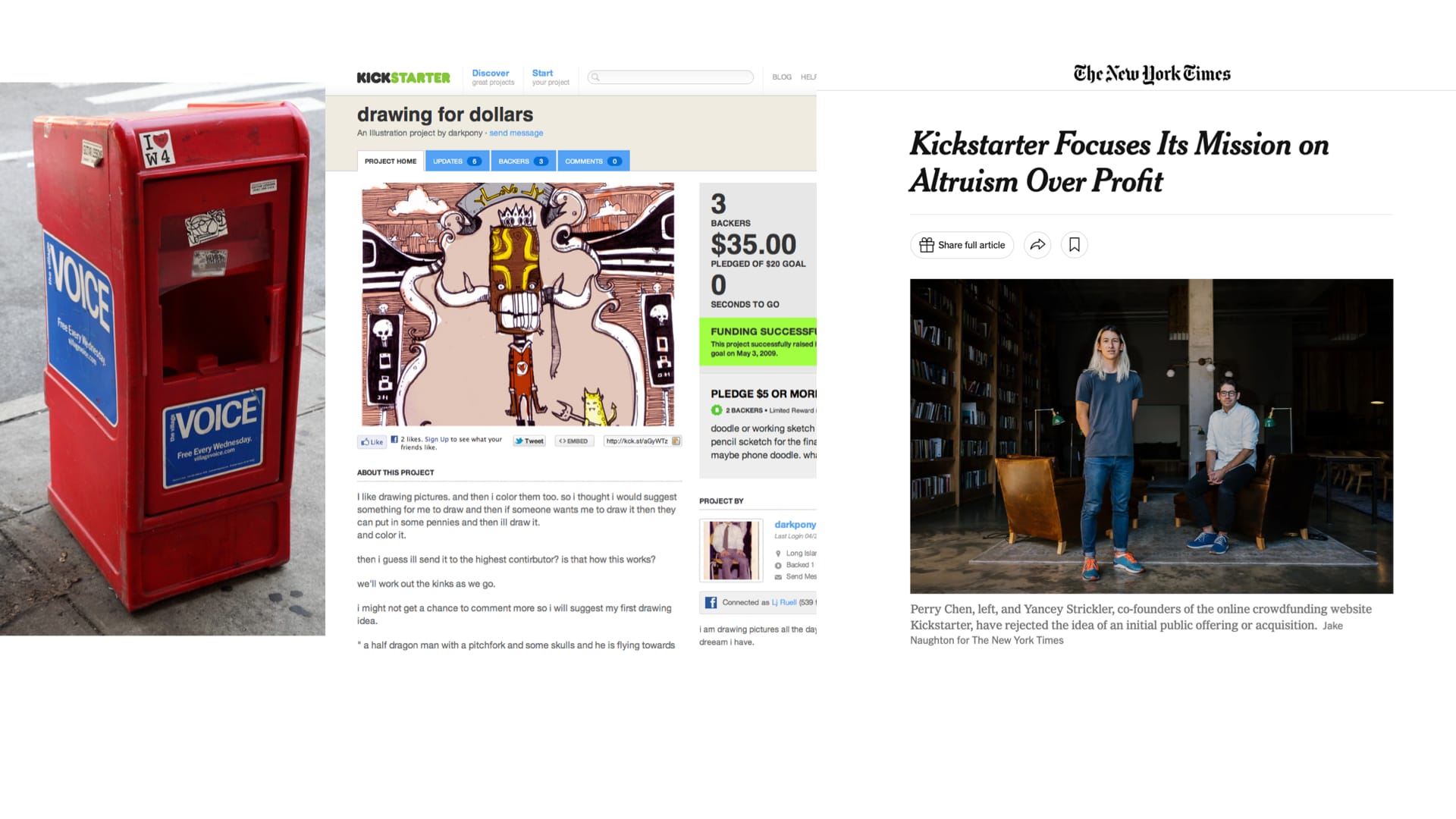
My first career followed his footsteps, kind of. I was as a music journalist who wrote for Pitchfork, Spin, and the Village Voice. I started a tiny record label that released music by artists and bands a group of us saw playing basement shows. Music was my life.
Around that time I met Perry Chen and Charles Adler, and together we started Kickstarter.
Kickstarter came out of a frustration we understood personally: if you were a creative person with an ambitious idea, it was very difficult to find funding unless you were already inside the system.
We weren't insiders. We built crowdfunding as a way for people like us to bypass the system by getting direct support from the actual people who wanted those things to exist.
We always had strong creative values. In 2015, Kickstarter became a Public Benefit Corporation — a legal structure that allowed the company to protect a nonfinancial mission alongside its financial responsibilities.
We followed closely as the law was designed and put into practice. Once the law became a reality in Delaware, we became one of the first companies to adopt the structure. More on this in a second.
In 2017, I stepped down as CEO and left Kickstarter.
In the years since, I’ve worked on a number of projects that try to make cooperation easier: Metalabel, Bentoism, several books, and DFOS, a new kind of shared private internet.
While working on one of those books — a collection with a dozen other writers — I ran into my own challenges with the legal system.
The book was doing well, but we didn’t have an entity that represented us as a group. I looked into forming an LLC, but the process was more complicated than I expected. To create something that reflected how we worked, we needed a lawyer to build a custom structure.
Around the same time, a friend who works with prominent visual and performing artists asked me to speak with some of the people in her world.
I learned that many of them were encountering the same problem. They paid lawyers to create bespoke legal structures for their creative practices. Some of the details differed, but many had effectively built versions of the same thing.
It was expensive. It was administratively burdensome. Almost everyone had to invent the structure from scratch.
Connecting this with my experience at Kickstarter, I began to wonder:
Could we do for creative people what the Public Benefit Corporation had done for mission-driven companies? Could we create a legally recognized structure designed around creative work?
I shared the idea with my friend. She brought together a group of lawyers to investigate it. A few weeks later, they came back and told us: we think there’s something here.
This was the beginning of the Artist Corporation.
What creative people told us
We began by speaking with artists and creators across different fields about how the existing system was working for them — people at every level. We also conducted an online survey that received more than 1,600 responses from artists and creators. Across both groups, we heard the same themes again and again:
It was hard to find funding.
Legal and administrative work was expensive and confusing.
Collaborators often lacked clarity about ownership.
Creative people felt powerless inside systems they did not control.
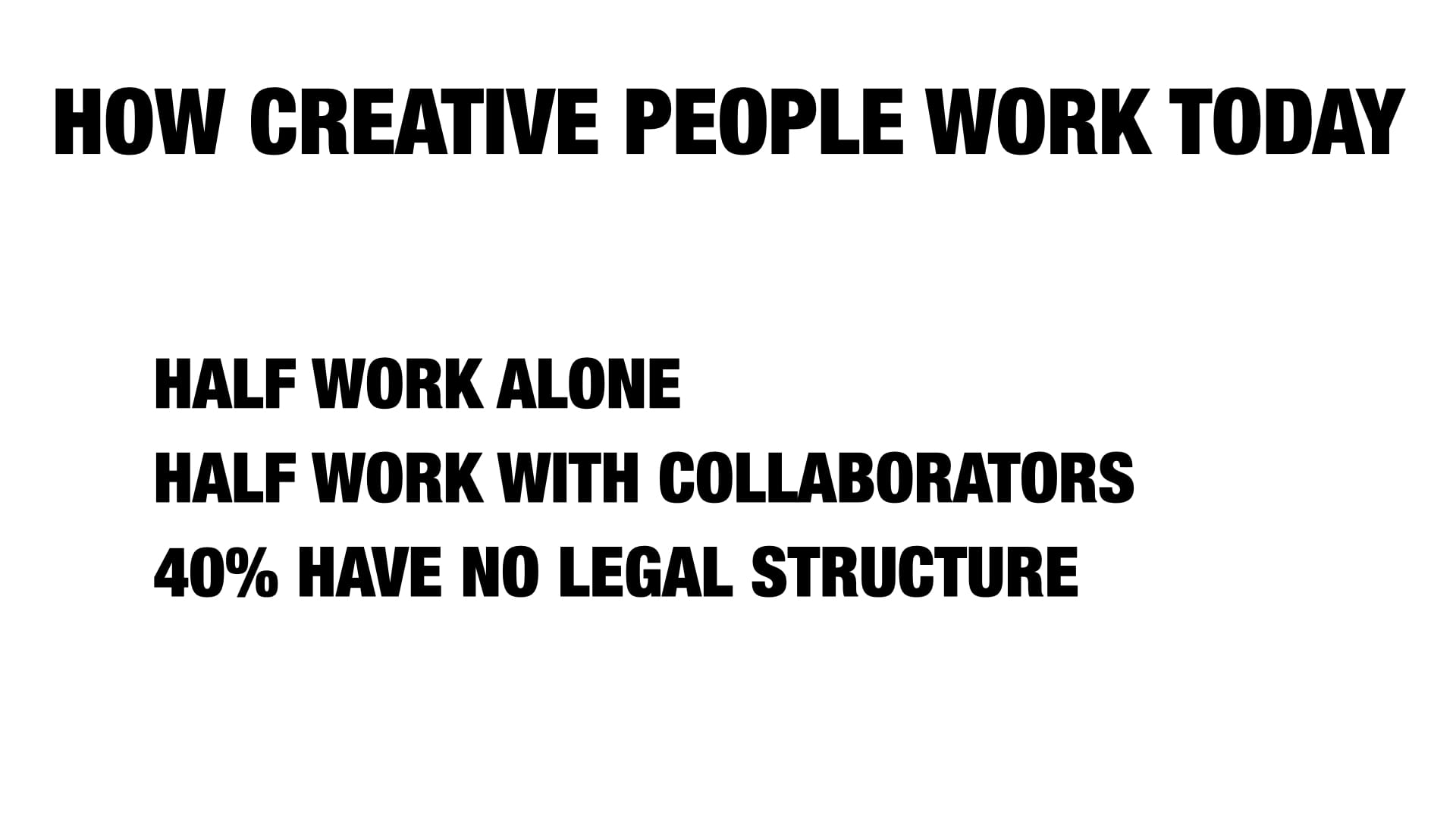
People were scattered across different structures: sole proprietorships, LLCs, nonprofits, partnerships, cooperatives, and other forms.
There was no shared starting point.
Creative people were all solving the same basic problems in different ways, often without the time, money, or specialized knowledge needed to solve them well.
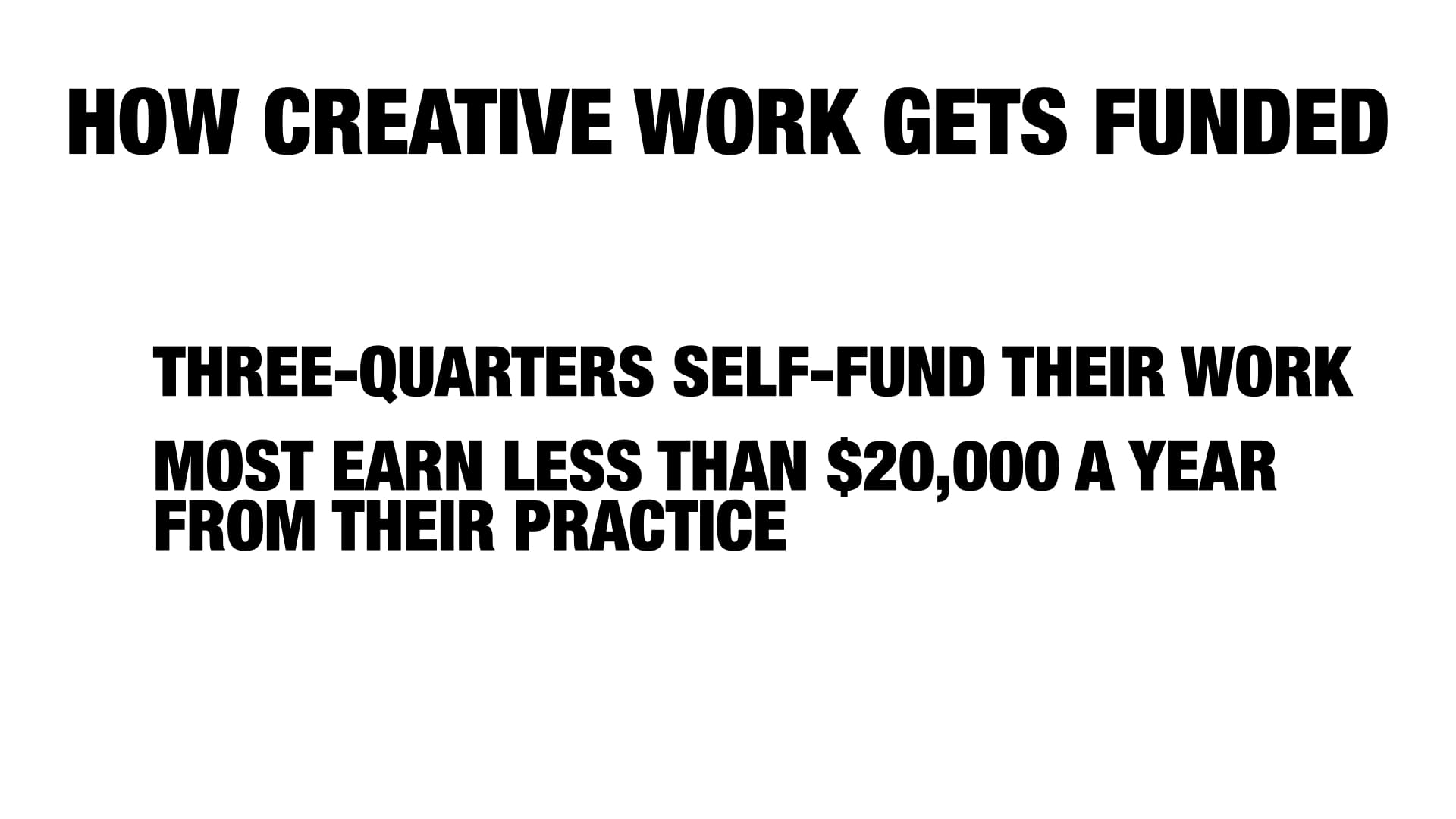
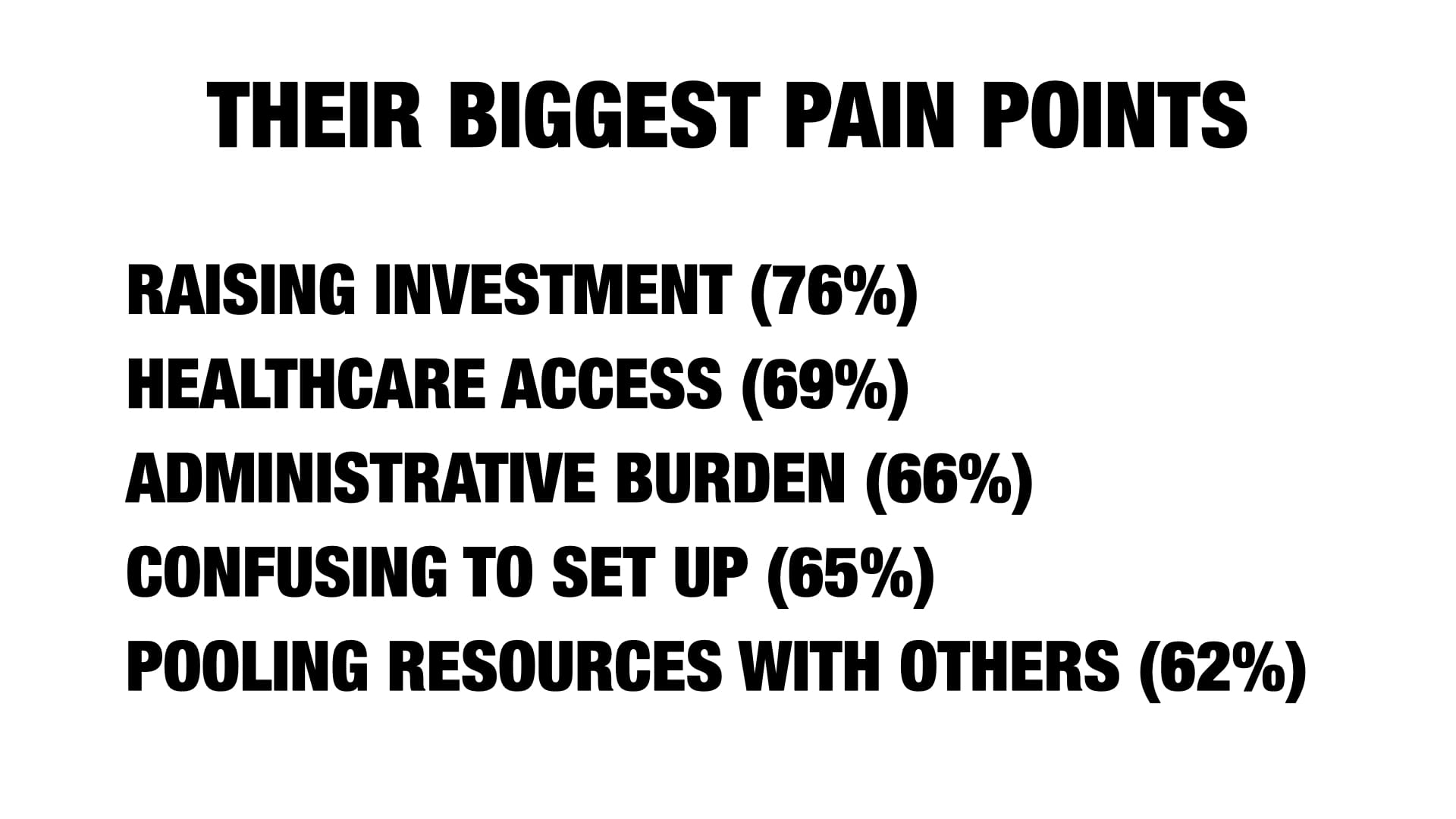
The biggest pain points were consistent with what we heard in our interviews:
- Access to funding
- Clarity of ownership
- Administrative burden
- Access to healthcare and other benefits
We were surprised to find that special tax treatment was less important to respondents than becoming more capable of accepting investment.
People did not want to be permanently reliant on charity. They wanted tools that could help them become more independent and self-sufficient.
We worked with a group of lawyers led by Susan Mac Cormac, a highly respected corporate lawyer who has helped create new legal entities before. With Suz and Stephanie Drumm, an Associate, we began drafting the Artist Corporation statute.
The result is a new form of LLC specifically designed around the needs of creative people that establishes a different set of defaults.
Instead of starting with a generic business structure and paying lawyers to adapt it to a creative practice, an A-Corp begins with creative purpose, artist control, shared ownership, and intellectual property built into the structure from the start.
People wanted something simpler and cheaper most of all. Our focus became designing an out-of-the-box structure that could respond to these needs.
What an A-Corp does
There are four major things built directly into the Artist Corporation structure.
A fifth — shared benefits — doesn’t come from the law itself. It could become possible if enough creative people begin organizing through the same system.
First, to qualify as an Artist Corporation the company must be at least 51% owned and controlled by artists or creators.
The intention was to create a clear threshold defining what qualifies and what does not.
An A-Corp can have outside investors. It can work with non-artist partners. It can bring in people with operational, financial, or technical expertise. But artists and creators must retain majority ownership and control.
Spotify, for example, could not declare itself an Artist Corporation simply because it operates in the music industry. The structure is meant to be controlled by the people making the creative work.
When you form an Artist Corporation, you state the artistic or creative mission of the entity. That mission becomes central to the company’s purpose.
A regular LLC can be used for almost anything. Its creative purpose may be important to the founders, but it’s not necessarily embedded into the identity of the structure.
With an A-Corp, the creative purpose is the point.
The entity exists to create, develop, produce, distribute, exhibit, perform, or otherwise support creative and artistic work.
We also included provisions concerning intellectual property and creative work, including clearer ways to define how existing and future work relates to the company and reversionary rights for artists (meaning that if the A-Corp dissolves, ownership of the work returns to the artists who made it).
The structure recognizes that creative work may be one of the company’s central assets. That sounds obvious, but most legal structures were not designed with the realities of creative practices in mind.
Artists often enter collaborations without clearly establishing who owns what, what belongs to the individual, what belongs to the group, and what happens when someone leaves.
An A-Corp doesn’t answer every one of those questions automatically. But it asks them at the beginning and provides a structure in which they can be clearly addressed.
The A-Corp also makes it easier to establish shared or fractional ownership.
Founders can opt into a share-based ownership structure and divide those shares among collaborators.
This creates a clearer way for a creative group to say what each person owns, how new people can enter, how ownership changes over time, and what happens if someone leaves.
It can also create a clearer path for outside investment. That investment still has to follow existing securities laws. The A-Corp doesn’t remove federal rules or make public fundraising automatically legal, but it does create a more legible structure for ownership and investment than many creative practices have today.
The fifth possibility is not something the law creates directly.
If Artist Corporations gain meaningful adoption, they could help create access to shared services and benefits — including, potentially, group healthcare plans or other forms of employment support.
Creative people are currently scattered across many legal forms, income structures, and industries. Individually we’re rounding errors inside systems designed for someone else.
But if artists begin joining a recognizable common structure, we may be able to create a larger economic identity and greater collective bargaining power. The law doesn’t guarantee that outcome, but it creates a possible foundation for building it.
What an A-Corp doesn't do
There are two important things to understand about A-Corps.
First:
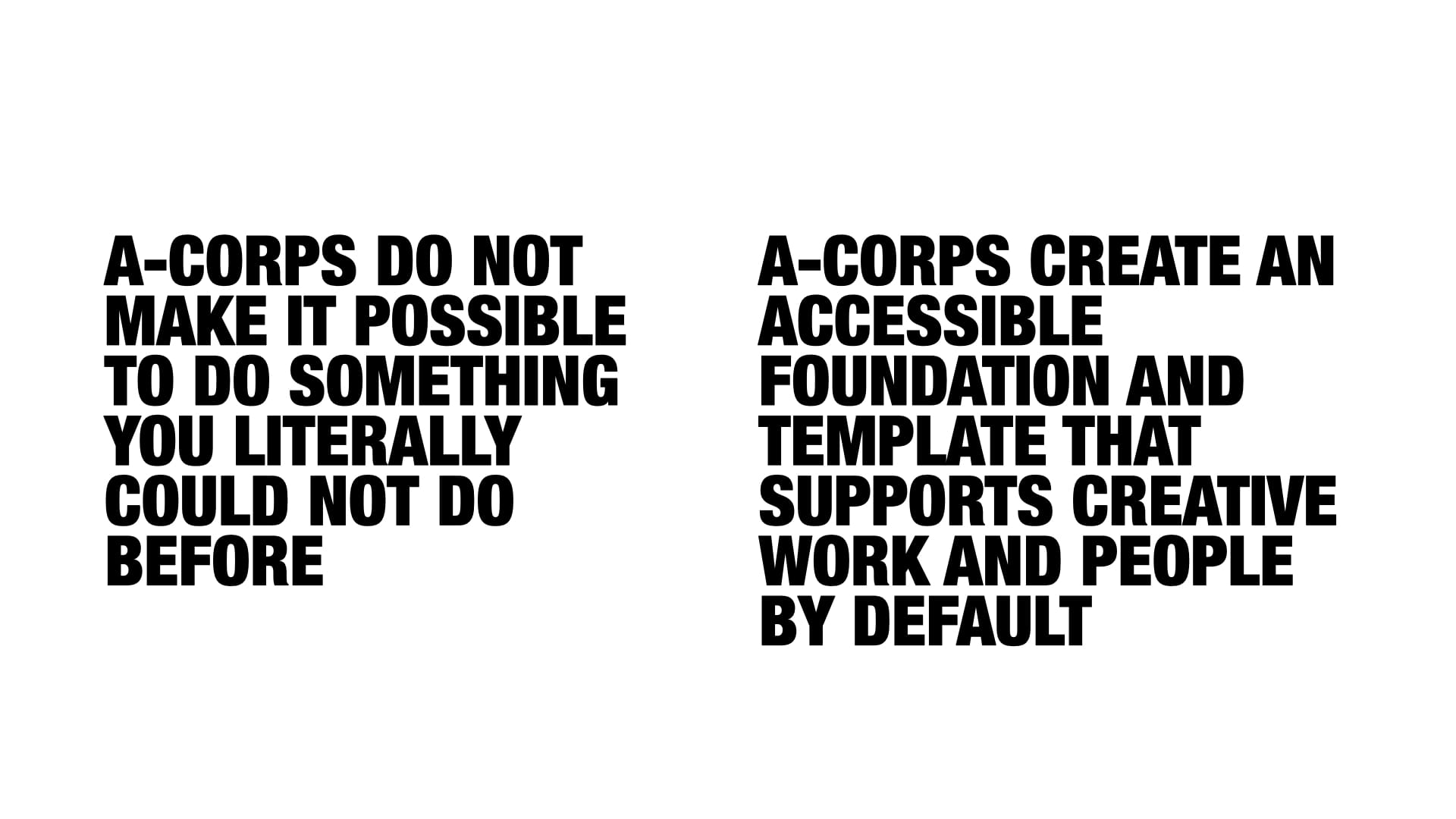
An A-Corp does not make it literally possible to do something that could never be done before.
With enough money and the right lawyers, creative people have already been able to build structures containing many of these provisions.
Second:
An A-Corp creates a new starting point that is more affordable, more accessible, and designed to protect the interests of creative people by default.
It doesn’t eliminate the need for lawyers. It doesn’t change federal tax, securities, or copyright law. It doesn’t automatically create funding, healthcare, or financial success.
What it does is make the beginning much easier. Instead of every creative person having to invent the structure independently, we can begin from a common foundation designed around the way creative work actually happens.
From law to reality
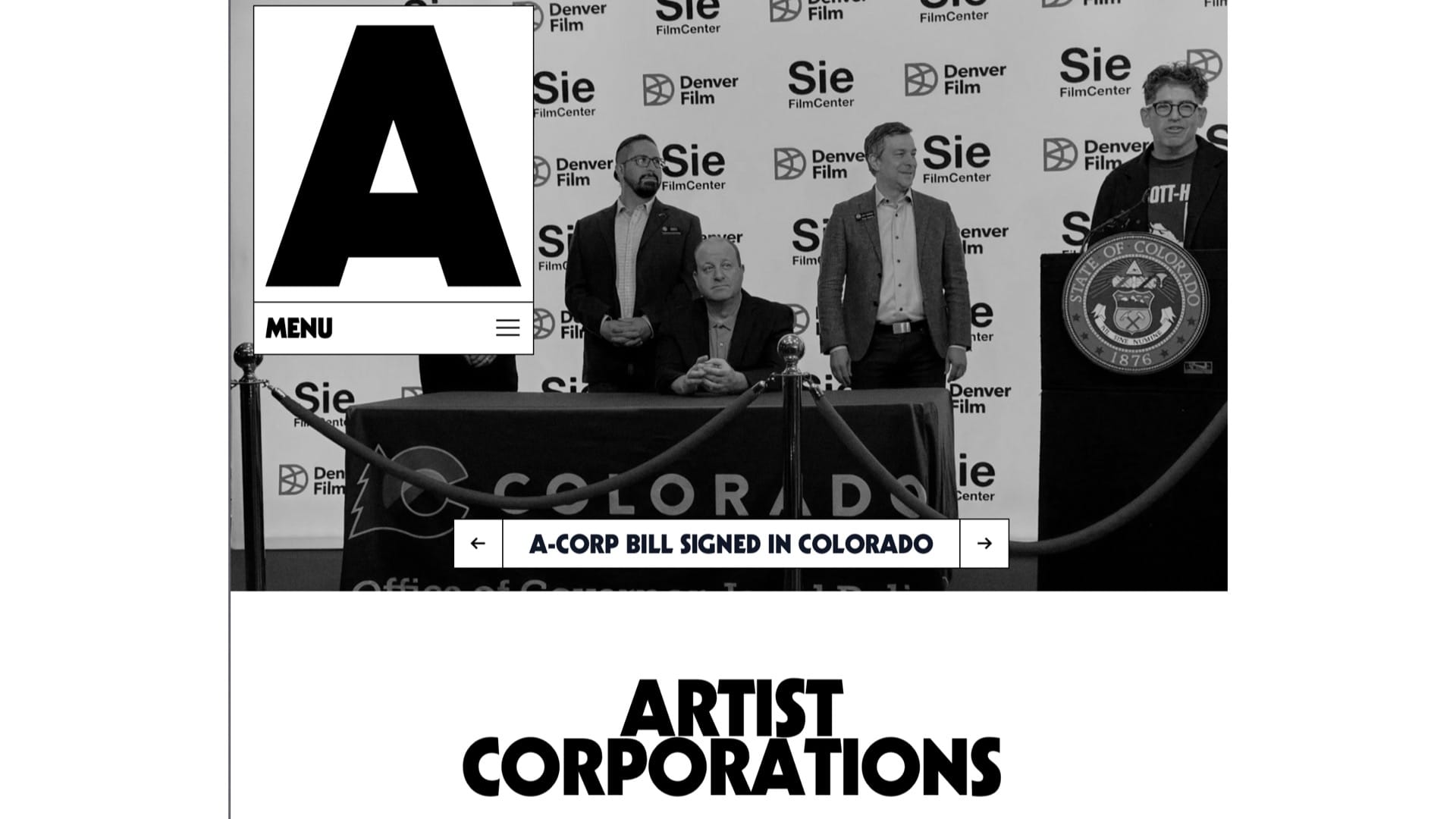
In June, the Artist Corporation bill was signed into law in Colorado with bipartisan sponsors in both the House and the Senate.
The first Artist Corporations are expected to begin forming in early 2027.
Getting to this point took two years of behind-the-scenes community building, legislative work, legal drafting, and collaboration with people across Colorado.
Colorado remains the center of the work for now. We're also beginning conversations about how the idea could eventually expand to other states.
Passing the law was a significant milestone. But the law is not the finish line. It's the beginning, not the end.
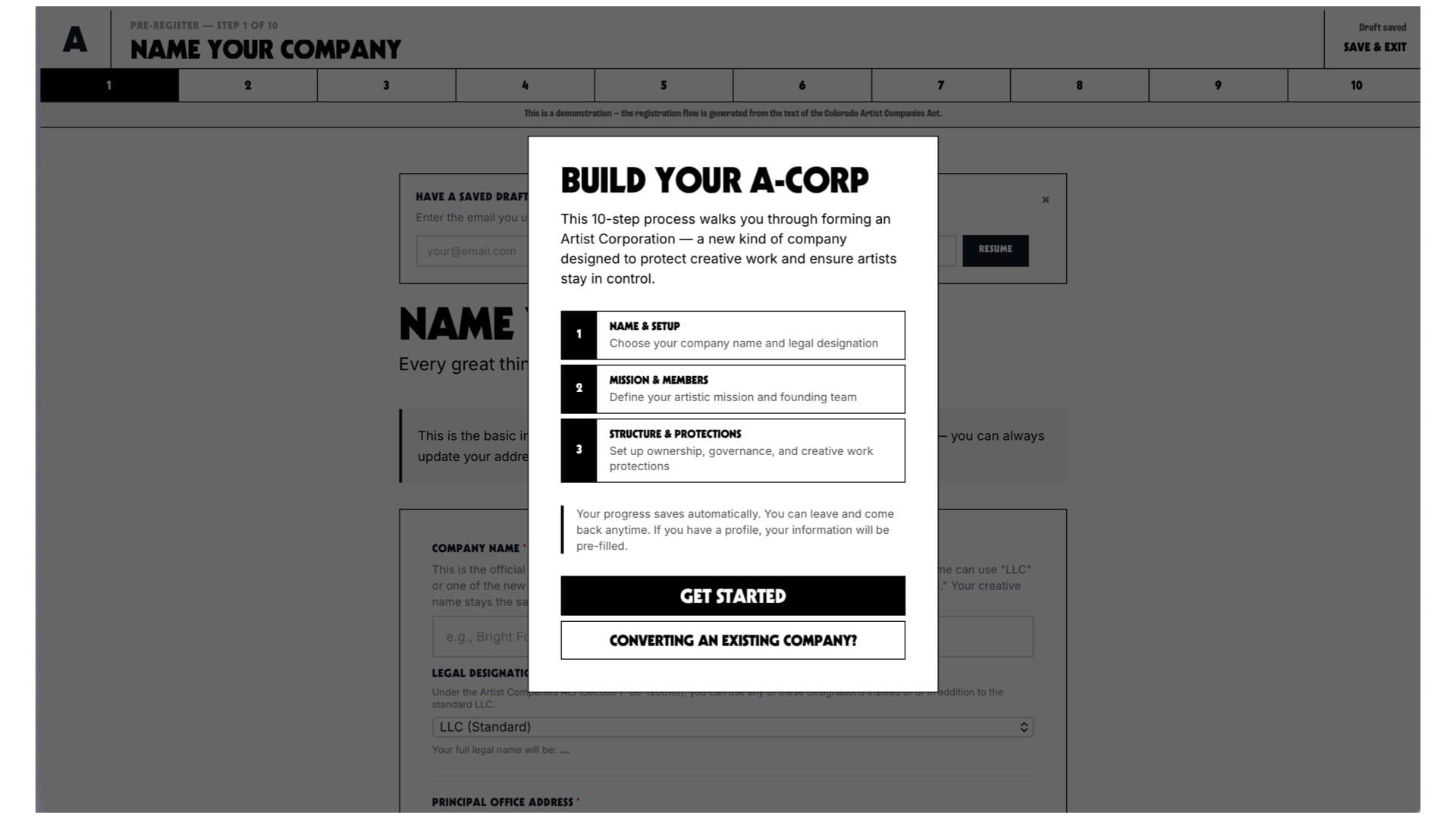
At ArtistCorporations.com we created a sample registration process that translates the statute into understandable questions, dropdown menus, and checkboxes.
It asks questions like:
- What is the creative mission of the company?
- How should financial returns and creative purpose relate to one another?
- Who are the founding members?
- How should ownership be divided?
- What creative work belongs to the A-Corp?
This is the beginning of a larger suite of tools that we — and, we hope, others — build to help people form and administer Artist Corporations.
The goal is not simply to pass a law and leave people to figure it out. The goal is to make a structure that's genuinely usable and understandable to the creative community.
So, if someone asks you what an A-Corp is, you now know what to say:
An A-Corp is a new company form designed to protect creative people and creative work by default.
That's the simple answer. It’s an accessible legal structure built around creative purpose, artist control, creative ownership, and collaboration. It gives creative people a stronger place to begin.
This will not change things overnight. The A-Corp is not a magical money tree that will suddenly transform the economic circumstances of every artist.
This is work that will take time.
There’s a version of the future where the law exists, few people use it, and none of its larger potential is realized.
There’s another version where creative people begin organizing through this shared structure, services grow around it, funders recognize it, states adopt it, and artists gain greater independence and collective power.
The law cannot create that future by itself.
Creative people have to choose it, use it, and have success with it.
That is the path we hope to be on. If we band together as a community, we will build it.
A selection of questions asked by the audience during the Q&A.
What counts as an artist or creative practice?
The law defines an artist broadly, drawing from language already used in copyright law.
It includes people creating written, visual, graphic, literary, musical, audio, digital, performing, interactive, and other forms of creative work. An artistic mission can include creating, developing, producing, distributing, exhibiting, performing, or otherwise supporting artistic and cultural work.
We tried to write a 21st-century definition without making it so broad that every business could call itself an A-Corp.
There will inevitably be fuzzy edges. In the beginning, people will self-attest that they qualify. If meaningful financial or tax benefits eventually become attached to A-Corp status, stronger protections against abuse may become necessary.
But I also want to say that I don’t think about this only through the framing of “the artist as economic actor.”
Creative expression is about truth, beauty, imagination, and reaching for something inside yourself. Part of the artist’s role is to step outside society’s systems and reflect them back to us.
Artists should not have to become businesspeople all the time, even though they are often forced to be.
The goal is economic empowerment, but it is also to protect the soul of the artist—to create a structure where the work can remain the work.
Can an A-Corp accept investment?
Yes, but an A-Corp remains subject to the same federal securities laws as other companies.
It does not allow you to announce publicly that anyone can invest without going through the appropriate regulatory process. Those rules do not go away.
The first phase will likely focus on making smaller-scale investment easier to structure: investment from close networks, professional cultural investors, or others who understand the practice and the risks involved.
What changes is the structure that investment enters. Artist control, creative purpose, ownership, and the relationship to creative work have already been clearly addressed.
There is no single model for what an investor receives in return.
For one practice, it might be a royalty or share of profits. For another, it could mean investing in a specific project and receiving an agreed portion of its revenue. For a larger ongoing practice, it might resemble an equity investment in a studio or creative company.
The A-Corp does not prescribe the investment model. It gives people a clearer structure in which to define one.
Does an A-Corp create a new tax deduction or automatically change how creative work is valued?
No.
The A-Corp does not change federal tax law, and it does not automatically create a new deduction.
Creative work and intellectual property can already have financial value under existing law. The challenge is that when artists hold that work themselves, it can be difficult to document, structure, finance, or build investment around it.
Large financial institutions know how to acquire music catalogs and treat them as valuable assets. Individual artists often lack the legal and financial infrastructure to use their work in the same way.
The longer-term question is whether a standardized structure can make creative assets more legible without forcing artists to sell them outright.
That is something we want to keep exploring, but it should not be understood as an immediate tax benefit created by the law.
Can an A-Corp accept both grants and investment?
An A-Corp can accept investment, subject to the same securities laws that apply to other companies.
It cannot currently receive tax-deductible philanthropic donations directly simply because it is an Artist Corporation. For that kind of funding, an A-Corp would still need to work through a fiscal sponsor, nonprofit partner, or another appropriate structure.
We have explored a future pathway that could allow philanthropic funding to enter an A-Corp more directly, but that would require changes beyond Colorado law, including at the federal level.
So the answer today is: investment, yes; tax-deductible philanthropic contributions, not directly.
Will I still need a lawyer?
For a simple Artist Corporation, the standard formation documents and tools should provide a strong starting point without requiring an expensive custom legal process.
But more complex arrangements will still require lawyers.
If you are accepting significant investment, working across multiple countries, receiving municipal funding, creating unusual ownership arrangements, or negotiating complex intellectual-property agreements, you should expect to need professional legal help.
The A-Corp does not eliminate lawyers. It reduces the amount of custom legal work required to get started.
It is the difference between beginning with a blank page and beginning with a structure already designed around the most common needs of a creative practice.
When can people form one?
The first Artist Corporations are expected to begin forming in Colorado in early 2027.
Before then, we will continue publishing information, holding online and in-person sessions, testing the formation tools, and working with legal and cultural organizations across the state.
The goal is to make sure people do not simply hear that a new law exists.
They should be able to understand what it means, decide whether it is right for them, and form one without having to navigate the process alone.
On Wednesday, August 12 at 3pm ET, I'm hosting an online information session for anyone interested in learning more about Artist Corporations. RSVP here