Unscale the internet
These are the days of being public. Even as we're building shared private internets with DFOS, its existence, ironically, needs public attention, at least to start.
So — I've been tweeting again.
Last week I tweeted my essay "The Post-Individual" from a couple years ago. The post ended up getting hundreds of likes and 200,000+ views.
Then the trolls showed up.
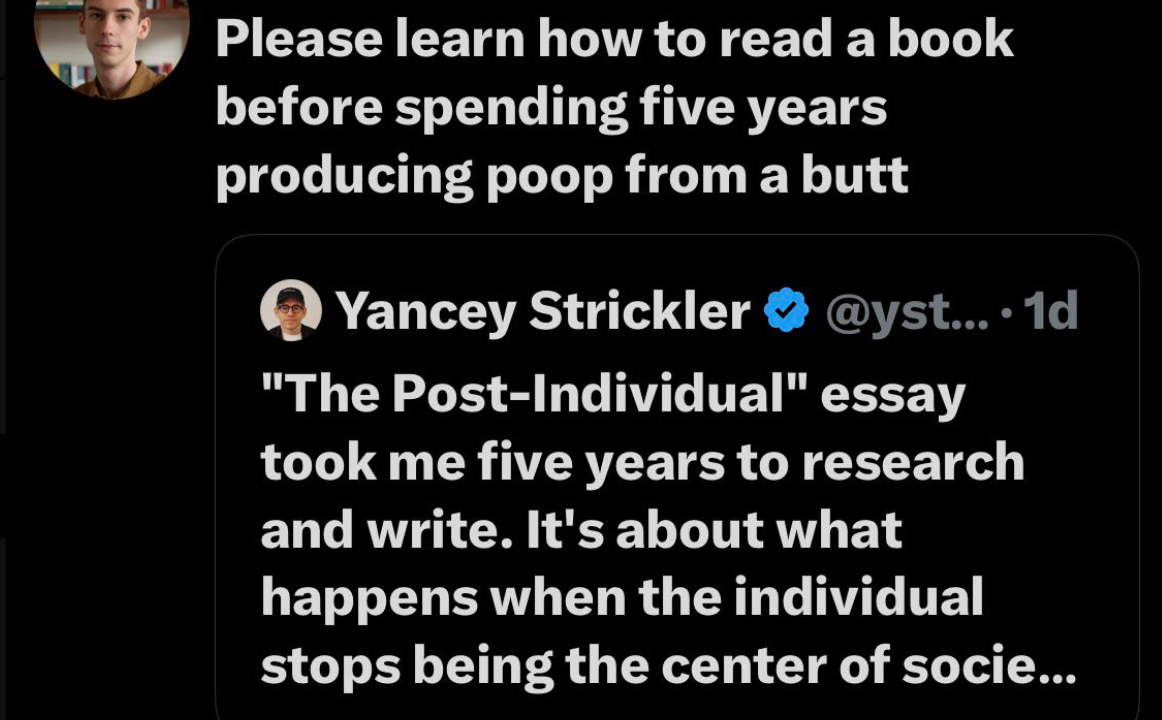
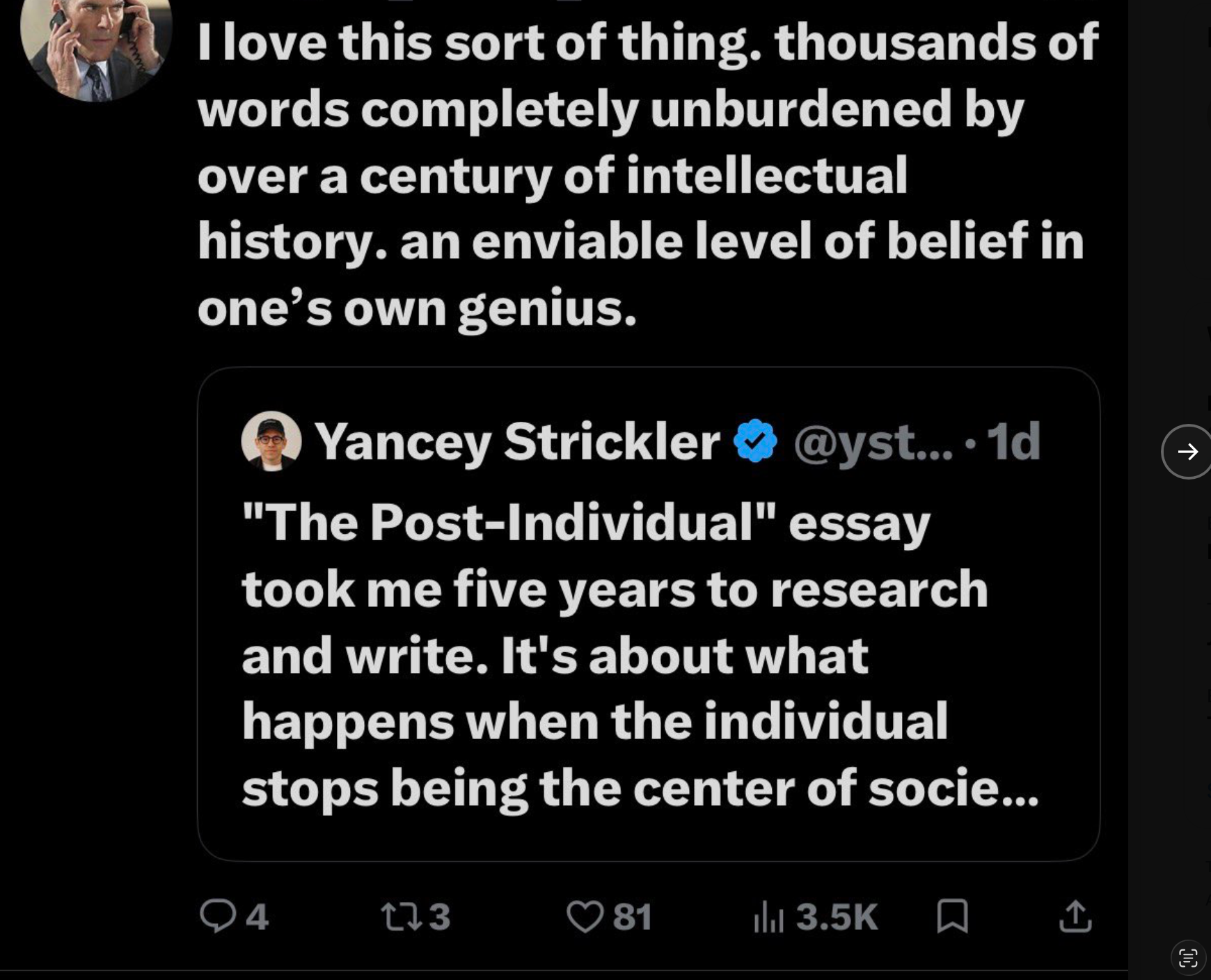
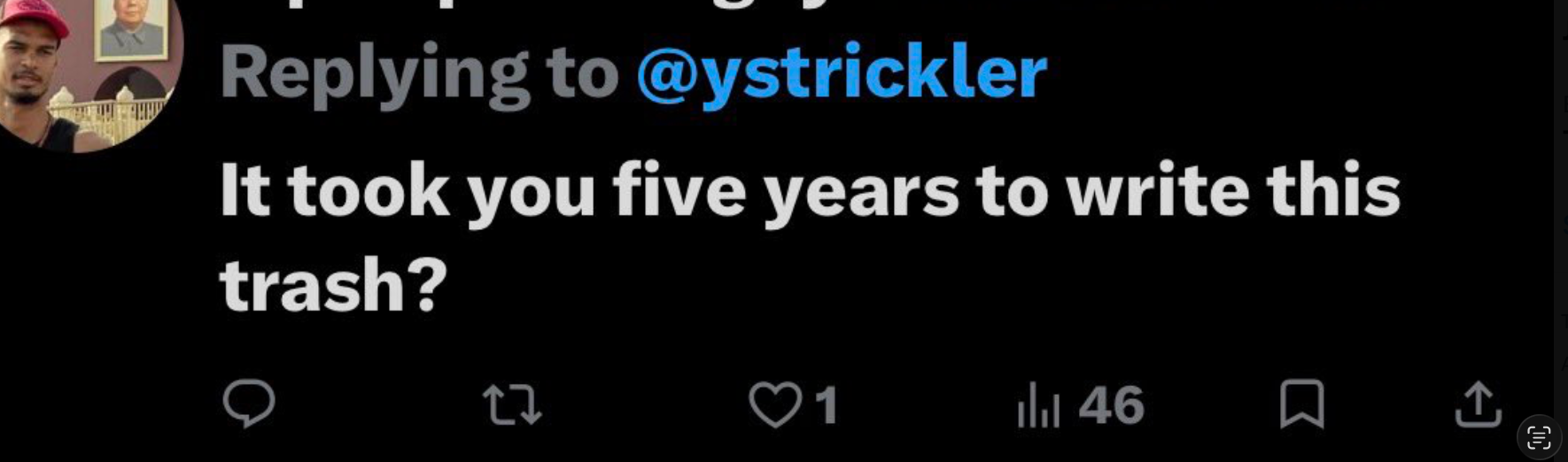
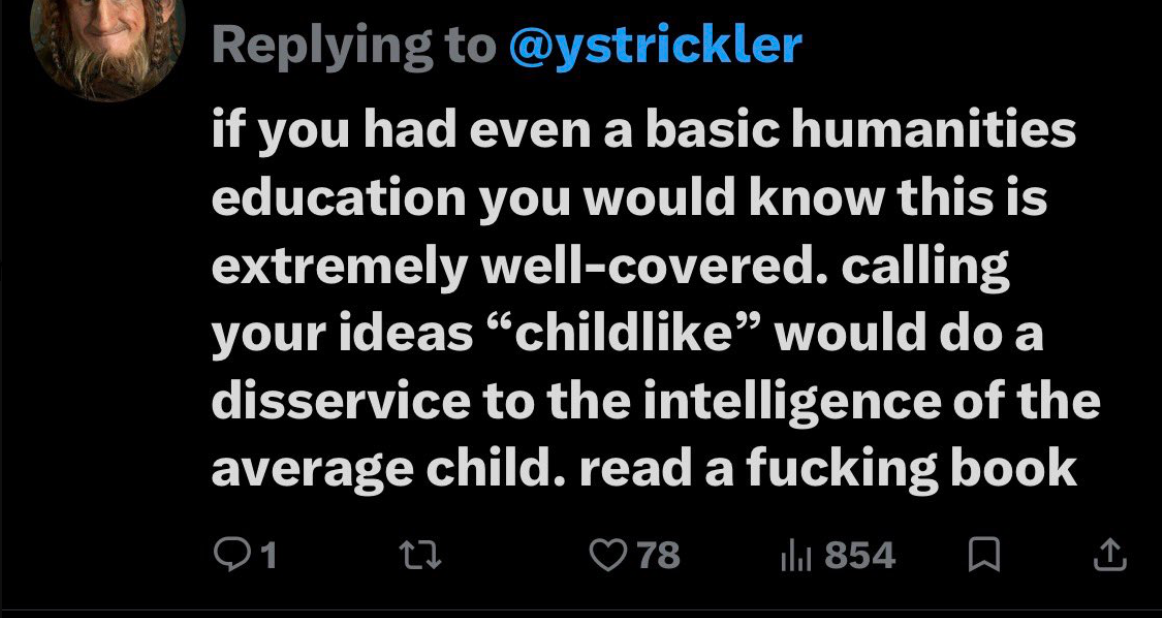
Someone with an academic background reposted it framing me as a tech bro. My mentions immediately began to flood with anon accounts, academics, and critics saying some version of the same thing: you don't belong here, your ideas don't count, go away.
Ah, X...
Dozens of posts and DMS like this streamed in over the next 72 hours. The throughline was a specific kind of academic gatekeeping: you arrived at ideas we already own, without our permission, so you deserve to be mocked.
Earlier that same day I'd been editing the transcript of an exchange Josh Citarella and I had in this past season of the New Creative Era podcast about scale and the internet.
JOSH: The unspoken assumption we bring to our day jobs, media engagement, friendships, and social lives is that we are in the constant pursuit of infinite scale. The basic assumptions of the Web 2.0 internet that millennials grew up with were internalized culturally, socially, and economically to the extent where they rewrote our way of thinking about how you approach your passion, job, and friendships.
YANCEY: Noticing it is like a fish seeing the water it swims in. The blessing and the curse of scale. The blessing of, oh my God, anyone in the world can discover me. The curse of everyone has discovered me and it's a bad thing.
This week was a live demonstration of that exact thing.
I posted the essay because I think the ideas are relevant and point to some important shifts we're all going through. Most people responded exactly the way I'd hoped. But scale doesn't just amplify the signal you want. It hands a megaphone to everyone else too. My presence on public channels gave strangers the license to try to wreck my work and ego for sport.
This is a classic online dynamic, but that doesn't make it harmless. It creates real personal stress from people I'll never meet, and who don't want anything from me other than the satisfaction of landing a punch. Like the guys who started showing up to mosh pits just to hurt someone. They didn't come for the music.
The only reason I was sharing this work was to help draw attention to the underlying ideas behind DFOS — why dark forests and private internet spaces for identity matter. The essay was meant to help illustrate that story. I didn't realize the reaction would too.
What I'm left with: a desire to unscale. To be in spaces where ideas can be heard and developed without the rage brigades trying to inflict pain just to feel something. We've been taught to see scale as the whole point of being online — a delusional VC logic we've accepted as the cost of participation. We shouldn't. Our attention and energy are too scarce for it.