Everyone sits in the same traffic now
Josh Citarella and I discuss this essay in a new episode of New Creative Era. Listen on Apple, Spotify, and the web.
My model of the internet is the global village. Its topography a sprawling universe of houses and neighborhoods beyond what you can see. You can go forever and never know what you’ll find. This is the wonder of the internet to me.
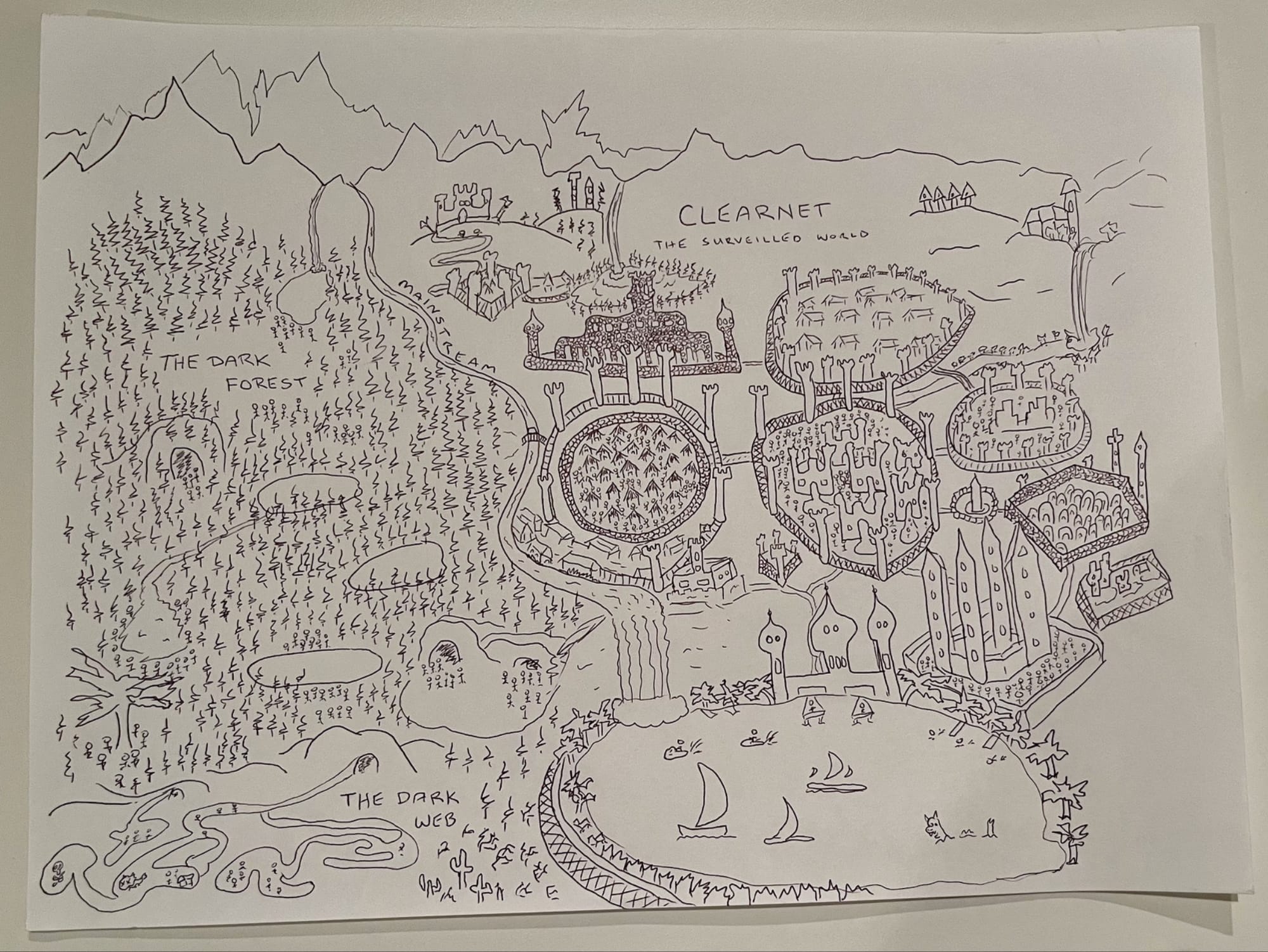
In the last two decades, this landscape changed as new infrastructure built by a handful of companies (mainly Google, Meta, and Amazon) reorganized the web. The original village of the internet, with its infinite choice and discovery, still remains. Only now these big highways of the Instagram feed, the TikTok feed, Amazon search, and others cut through and over everything.
Where once there had been neighborhoods and communities, there’s now an eight-lane blacktop dotted with billboards and exit ramps sold at auction to advertisers.
Even though the internet offers infinite possibilities, everyone sits in the same traffic now.
We all go to the same places. We look at the same ad modules. We drive on the same five roads each day. We follow an orderly system as if it was the basis of life itself, when nothing like it existed before.
The builders of these spaces were trying to be the next Steve Jobs.
They became the next Robert Moses instead.
Who was Robert Moses?
Robert Moses isn’t a household name, but his constructions are. From the 1920s through the 1960s, Moses was the primary builder of New York City and its surroundings as we know it.
During those decades he built the Triborough Bridge, Cross-Bronx Expressway, Brooklyn-Queens Expressway, Jones Beach, Verrazano Bridge, Lincoln Center, World's Fair, hundreds of miles of highways, hundreds of parks and playgrounds, and numerous bridges and tunnels that sliced, diced, and reconfigured the city at a scale and speed impossible to imagine today.
To look at New York from above is to see how Moses’s machines cut through it.
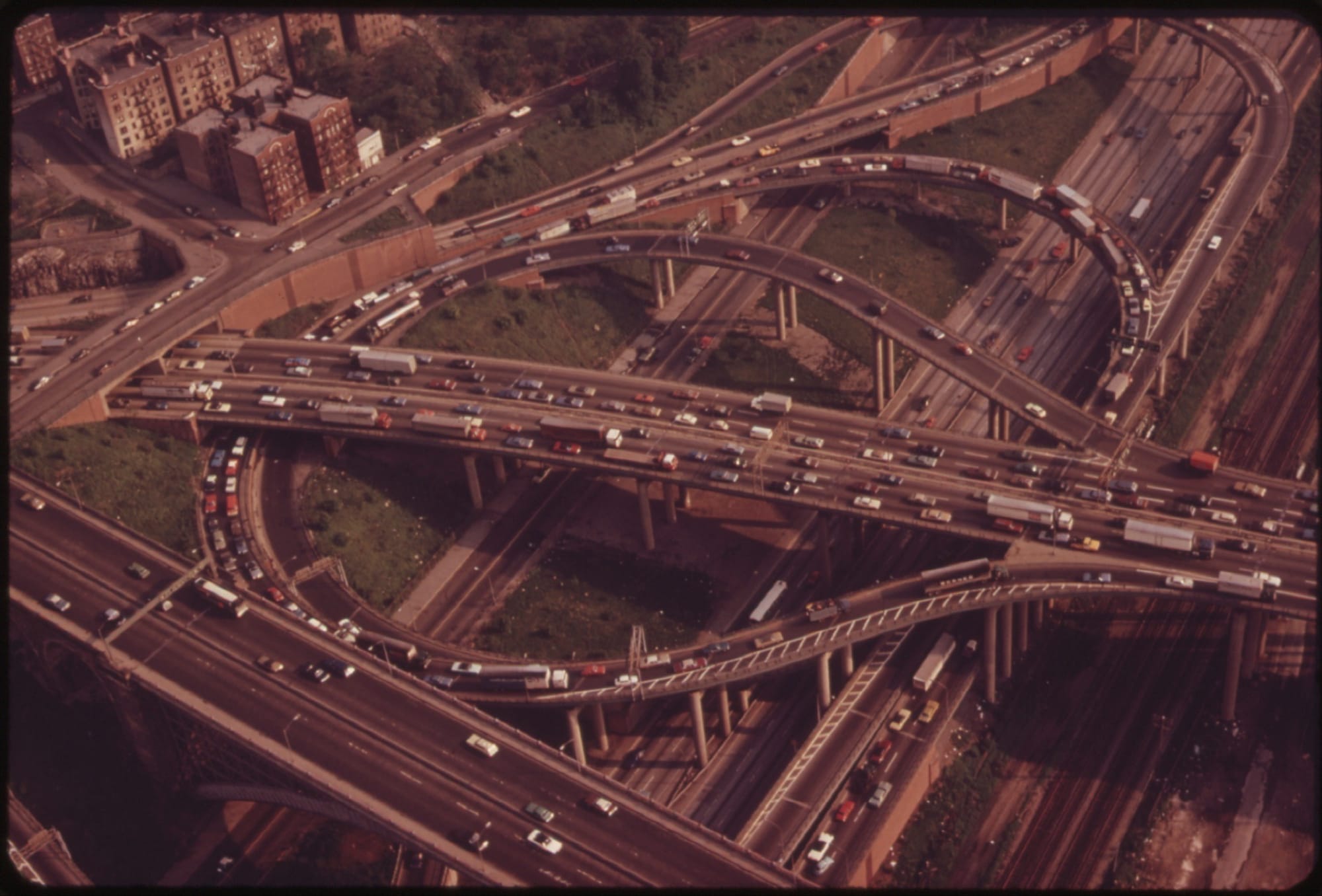
Moses never held elected office, yet at the height of his powers he possessed a dozen appointed positions he used to expand and control New York’s infrastructure. For decades, this made him a hero. While politicians and bureaucracies debated and dawdled, Moses got things done. The press and public loved him for it.
But the world he made reflected his beliefs and priorities, not those of the people who lived there. He built highways through residential neighborhoods, displacing thousands of families even though alternate routes with less impact existed. He prioritized roads over mass transit (Moses was driven around by a chauffeur and police escort). His blind spots became the city’s weaknesses.
Moses' strategy was to break ground as quickly as possible. Reversing a project was harder than finishing it. “Once you sink that first stake,” he said, “they'll never make you pull it up.”
Moses died in 1981. His vision still controls how New York moves today. This is the power of infrastructure: a decision made by one generation becomes the default inherited by the next.
The Robert Mosesification of the internet
What happened to New York City has happened to the internet at an even grander scale.
What was an open global village has become a series of highly controlled highways. The neighborhoods, communities, and mom and pop stops of the open web are now bypassed by the internet’s major highways.
This is the Robert Mosesification of the internet.
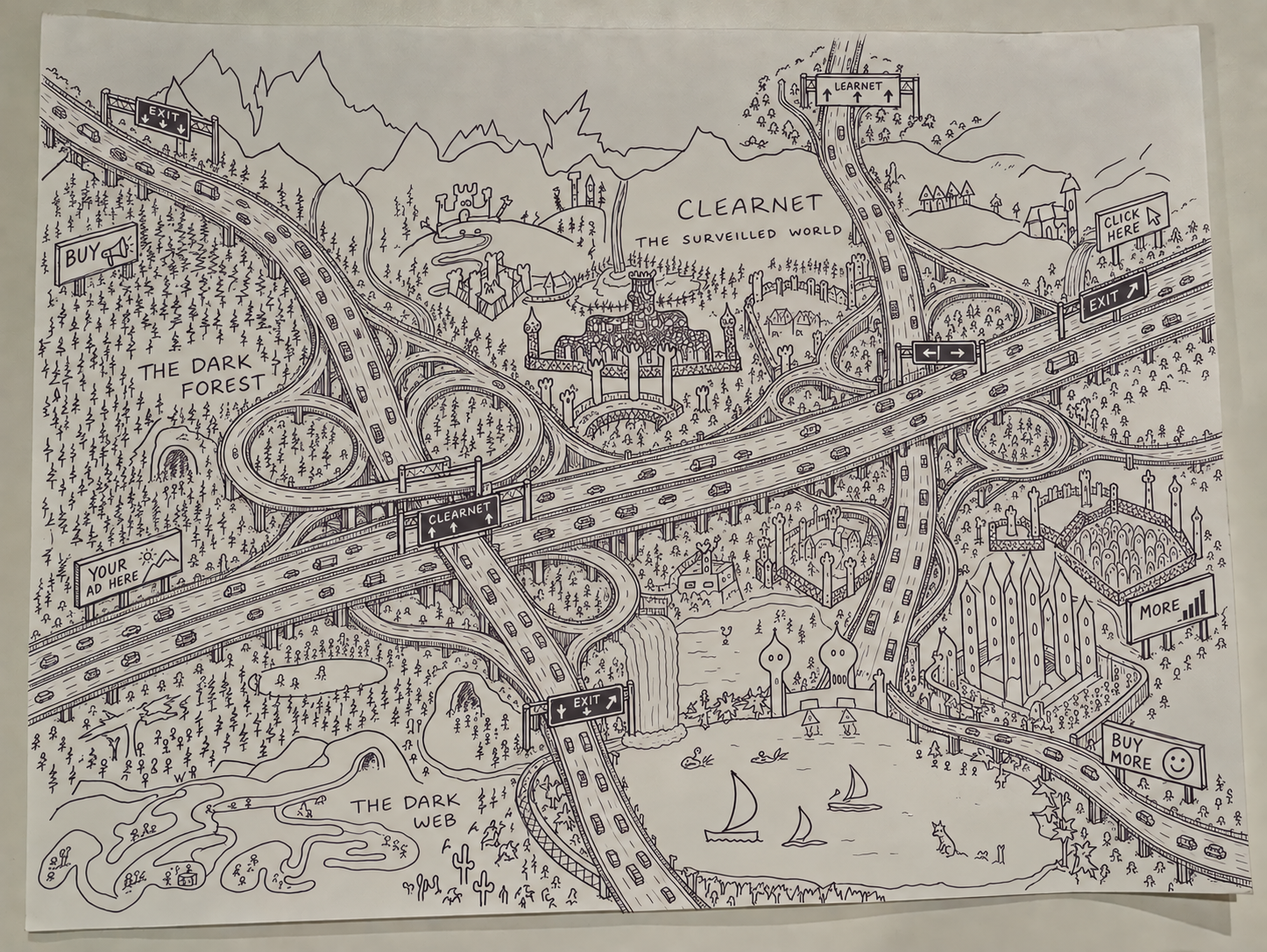
The point of the Robert Mosesified Internet isn’t to discover or explore. It’s to commute. It’s to scroll. Shop. Travel. It doesn’t matter where we’re going or for what reason, what matters to the platforms is their roads take us there. And that “there” is something they can control, influence, or at least know.
As the highways have gotten bigger, they’ve become harder to leave by design. Continued usage is treated as an endorsement of the infrastructure, but traffic alone doesn’t tell us whether people are satisfied. On the internet, leaving often means we have to get our people to come with us. This is harder than it seems. When Vine launched in 2013, Facebook executives agreed to cut off the feature that let users find their Facebook friends there.
People take these routes each day. Does that mean people want them? Or is it that, because of their position as deep social and technical infrastructure, we no longer see them as choices at all?
Go down Moses
The problem isn’t infrastructure or big visions that stretch into the future. The problem is when the infrastructure of the past limits the present and future. When we’re unable to adjust and things start to break, this causes problems for everybody.
These future-locking dependencies don’t just come from bad intentions. Moses entered public life as a champion of the public good who fought corruption. But as Moses’s power became absolute, he found it impossible to imagine other voices and perspectives having something valuable to offer. The goal wasn't a better New York, it was his New York.
For the tech platforms who’ve become society’s modern rails, it’s similar. What started as connecting people became ways of extracting from people. The economic health of the platforms — not the mental health of the people using them — became the priority.
This leaves me asking: where should we go? And because of my experience making technology, I also ask: how can we build this differently? And — important — is it worth building differently? I see the pro-social arguments why we should want more agency and power in our digital lives. I don’t see the argument I could make to an owner of that BQE why they should tear themselves down. The incentives point in the direction things ended up.
As we move into the age of AI, these trends accelerate and consolidate more. The era of the internet as distinct websites we go to might have already peaked. What comes next looks more like individualized direct information flows through agents and models. The open spaces of the internet become harvest points for information that agents gather and privately repackage for their users.
There’s a version of this internet where there aren’t any neighborhoods left at all.
What to do instead
We should reject this evolution to an internet of even more isolation. This is not its destiny.
The internet started with collaboration, not extraction. It was made with public funding, expanded through institutional collaboration, and made available to the public and technologists through open protocols and standards that nobody financially owned. This shared foundation allowed people to build new online societies and for people from all over the world to join them. One of humanity’s greatest achievements.
As the AI-driven web grows, so do the reasons for retreat into physical spaces and private digital ones where we feel unobserved and safe.
The dark forests are the new global village. The internet within the internet. Global and local. Internetworked and interdependent. The places where subcultures form, where ideas become collaborations, where people can be truthful without fear of surveillance or reprisal. Communities and spaces governed by and serving the people who use them.
These spaces run informally through group chats and on the margins of these larger platforms. But the companies building the next version of the internet can’t be trusted as the stewards of our safe spaces, too.
If we want an internet that doesn’t do these things, in my opinion it starts with four rights:
- The right to take your work and data elsewhere
- The right to take your connections elsewhere
- The right to save your work locally
- The right to preserve credit for the work you make wherever it goes
Some of these are possible in limited forms. Some platforms let you download an archive. Email-based platforms let you save your email list. But moving as a community is nearly impossible in most social spaces.
Leaving will always involve choices and disruption. But online especially, it shouldn’t require abandoning your community, connections, and catalogue of work.
Shared protocols, public APIs, and interoperable data can help make these freedoms practical. Bluesky and Mastodon offer versions of this approach. With DFOS, we’re working toward something like an internet-wide operating system for making and sharing files, designed so people can take their work and connections with them. The experience has to be good enough that using it doesn’t feel like some techie version of eating your vegetables. Convenience and experience beat values and aspirations.
People-controlled networks give us ways to build and share resources and protections individually and collectively. Even in an internet where AI agents freely roam and extract. With the right infrastructure, they can be places of our own that let us safely participate in other scenes and collaborations too.
Community oversight and governance help. Stewards should be directly connected and accountable to their constituents. But they alone are not enough. A decision can be wrong for you whether it’s made by an owner or a vote. We need the ability to leave and to always keep what’s ours.
These rights need to be built into how our systems work. For those of us who build these places, this asks something difficult. We have to make it possible for people to leave even when we benefit from their staying. The commitment matters most when it becomes inconvenient to us.
Imagine what our world would look like if the things we depend on didn’t exist as trophies to the past, but as evolving tools that future people have the power to change or take with them as they go.
The best places aren’t the hardest ones to leave. The best places are the ones where we choose to stay.
Thank you to Alexandra Apple, Carolijn Guytonbeck, Jacqueline Meridian McCormick, Joe Fletcher, Nat Twiss, Nicolás Madoery, Nicole V, Robert Lin, Sarah Hack, Scott E. Walters, and Shara Raqs for the comments, questions, and conversation around earlier drafts of this essay.